.NET back end · HR and payroll · 2026
Soporte Patitos S.A.
Staff, attendance, leave, performance review and payroll system, with business rules and permissions enforced in the API.
The problem
A support company needs one system for its employees, attendance, leave requests, performance reviews and payroll. The back-end challenge is keeping that data consistent and limiting what each person can see: employees read their own pay stub, payroll sees everyone's.
My role
University project by a team of three students (UIA, 2026). My contribution: the full back end and database, plus support fixing the front end. My teammates handled the color palette, deployment and part of the front end.
The solution
A React interface talks to a layered ASP.NET Core API: controllers receive requests, the business layer applies the rules and the data layer persists to SQL Server through Entity Framework Core. That separation lets the rules be tested in memory and persistence be tested on its own.
- React UI
- API / controllers
- Business rules
- Persistence (EF Core)
- SQL Server
Screenshots
Taken locally on the demo database: every name, ID and amount is fictitious. The app interface is in Spanish.
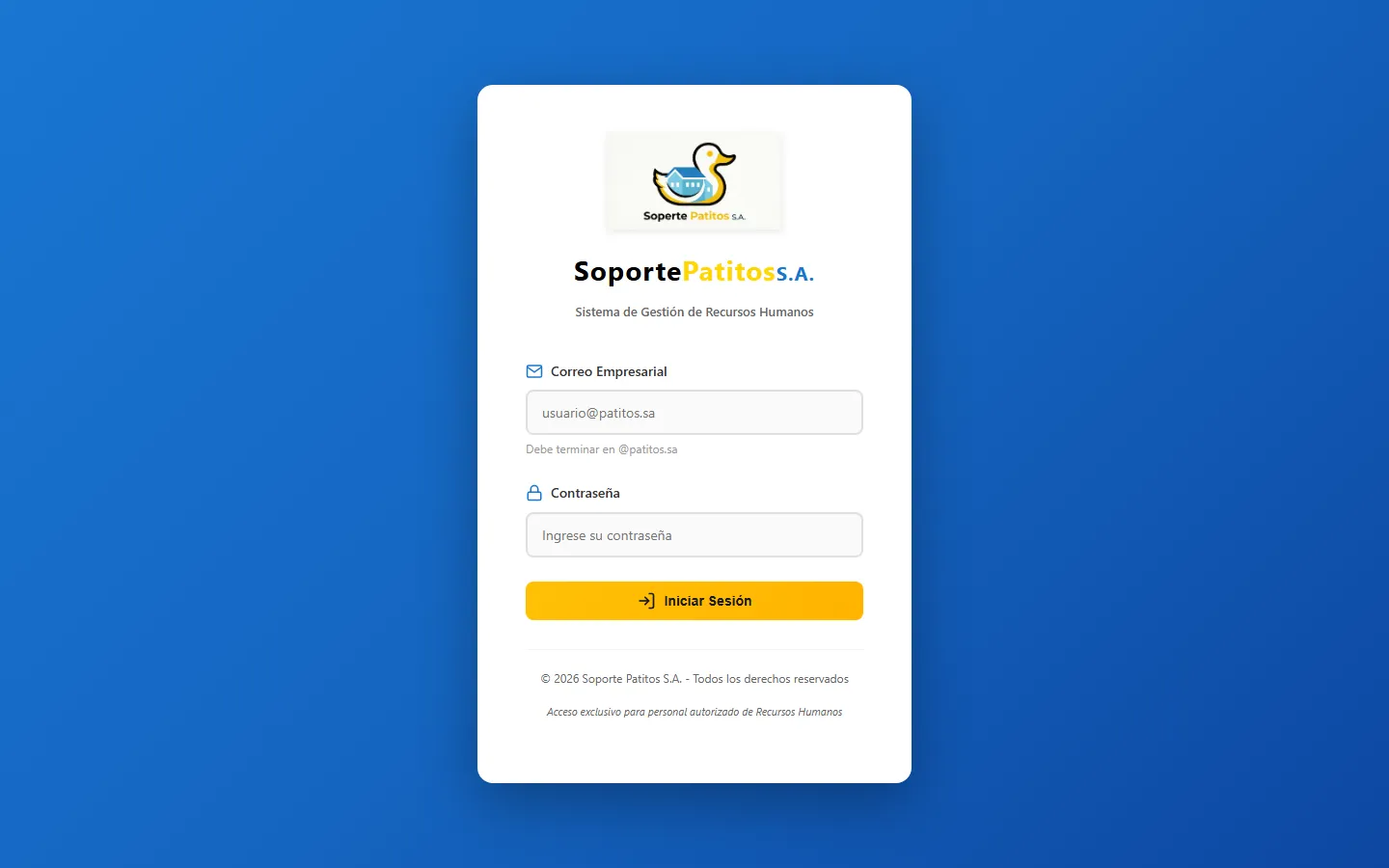
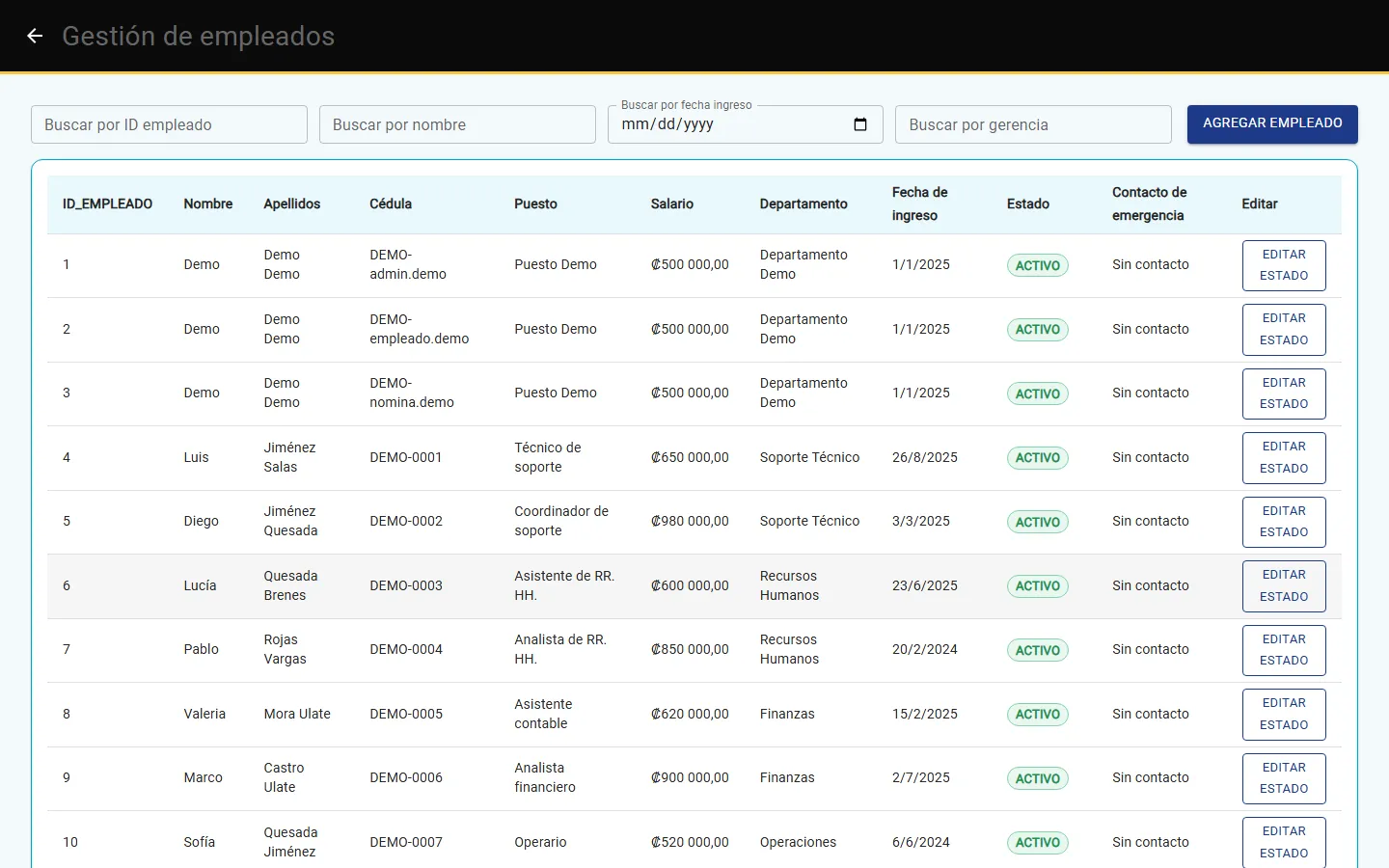
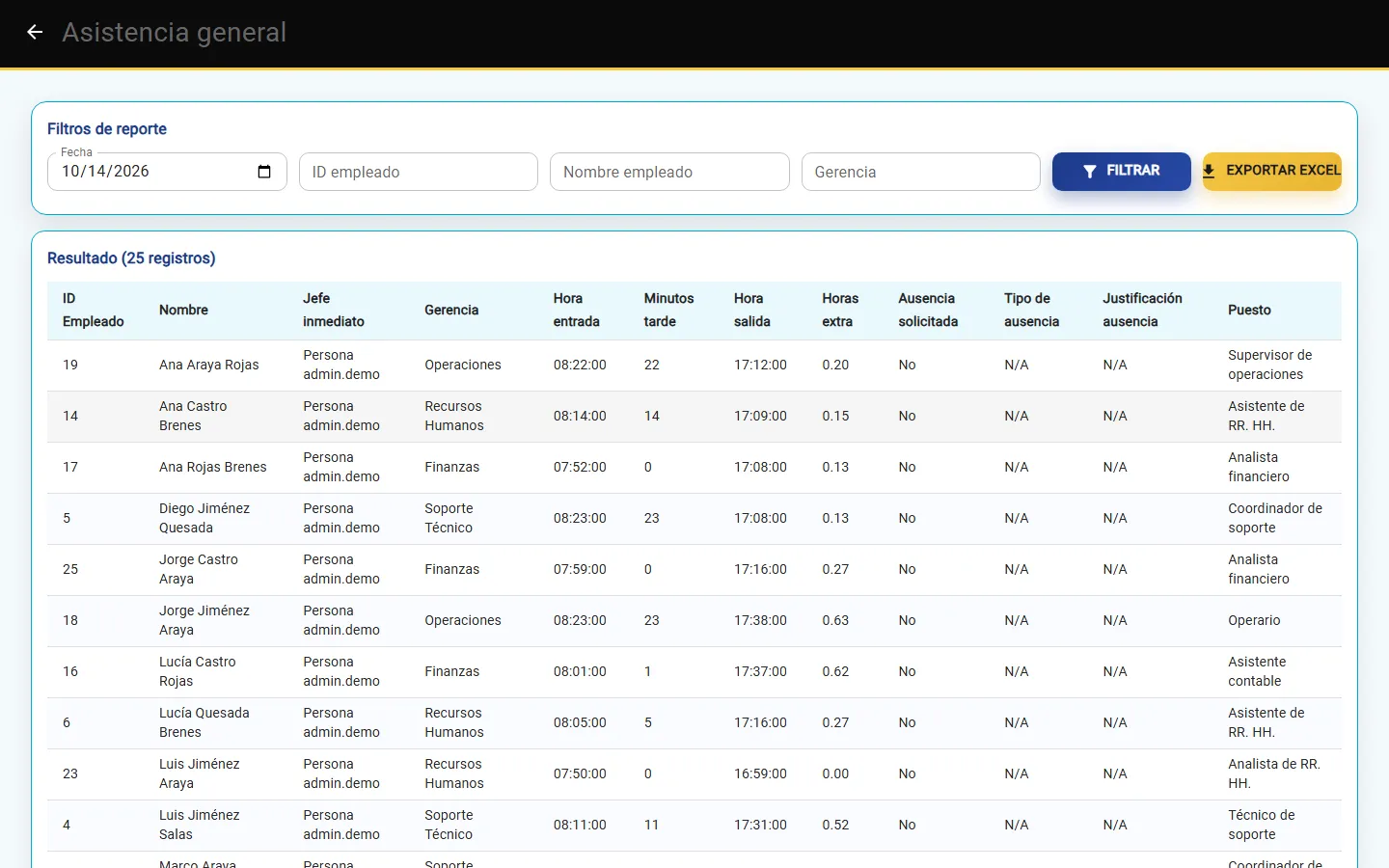
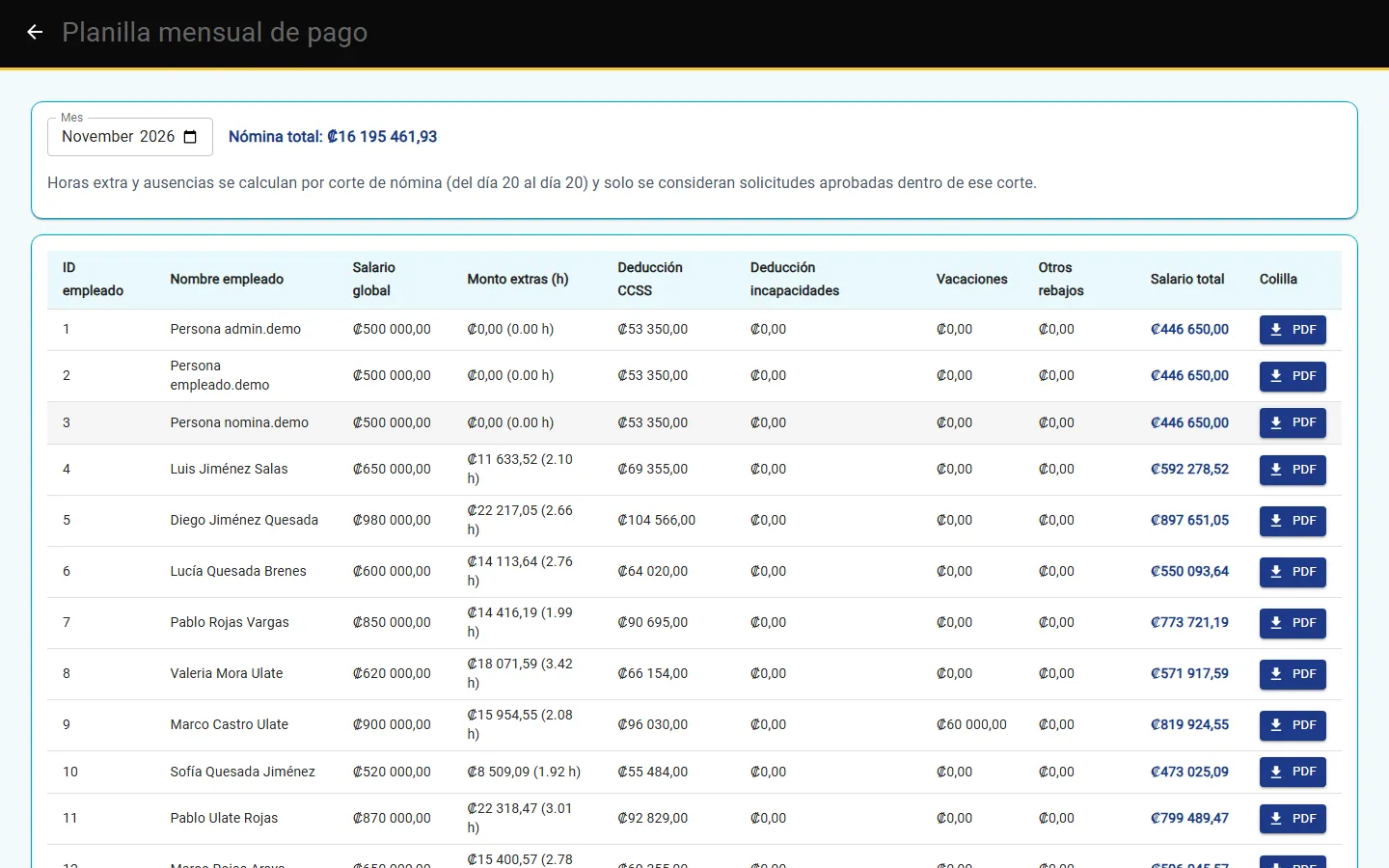

Technical decisions
Permissions are checked in the API
Hiding a screen doesn't protect its endpoint. Personal reads take the employee from the token and verify ownership; global listings are restricted to payroll and admin roles.
The server owns the net salary
Salary comes from the employee's position. The server takes deductions as data, rejects negative amounts and never accepts a net amount computed by the client.
Modern password hashing with transparent migration
Passwords use the ASP.NET Core hasher; legacy SHA-256 accounts are upgraded on their next successful sign-in.
A public error is not an internal diagnosis
Payroll endpoints separate business validation, missing resources and unexpected failures, without leaking SQL or exception details to the client.
Up-to-date dependencies
I moved the back end to .NET 10 LTS and the front end from Create React App to Vite, and replaced export libraries with known vulnerabilities. That left 0 known vulnerabilities in NuGet and npm.
What I verified
- Builds without errors on .NET 10 and passes 29 of 29 automated checks that need no database: hashing, roles, payroll permissions, password change and reports.
- With a local SQL Server: the pay stub is saved and read back through the business and data layers, and the transaction rolls back leaving no rows; plus 96 real HTTP checks of sign-in and roles using temporary accounts that are deleted afterwards.
- 0 known vulnerabilities in NuGet and npm dependencies, and a warning-free front-end lint.
- Local setup with user-secrets and a demo database with fictitious data, kept apart from any real data; a single command creates it with employees, attendance and org structure.
Scope and limitations
- It's an academic exercise: payroll takes deductions as input and doesn't compute statutory rates or have legal or tax validity.
- Nullability warnings remain, and test coverage doesn't span every attendance, leave and review flow.
- There's no public demo connected to a database. The code is in a new public repository with a clean history.
Need something similar?
Tell me what you need and I'll prepare a no-obligation quote.